Order Online
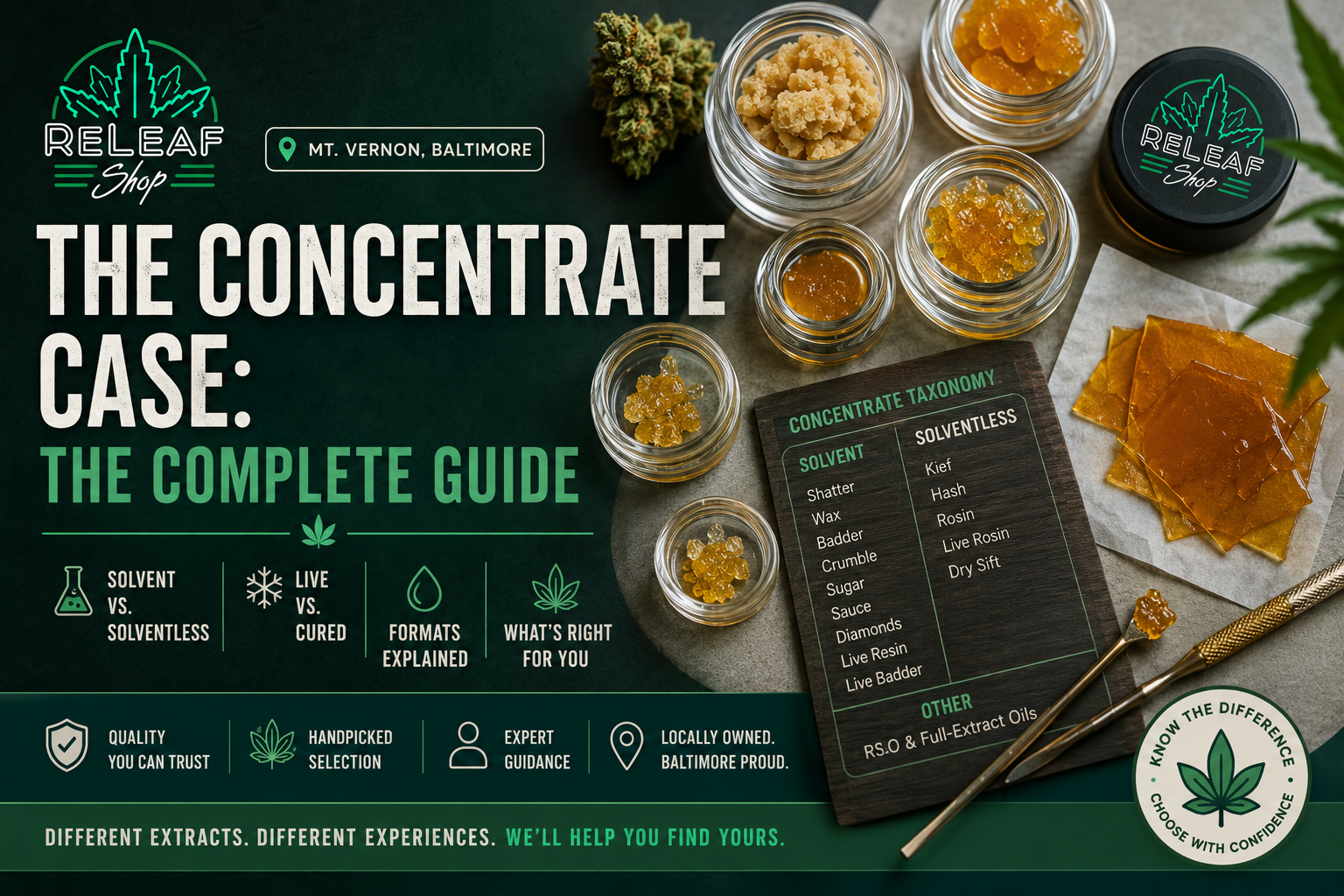
Solvent vs. solventless. Live vs. cured. Shatter, wax, badder, live resin, rosin, RSO — the concentrate case decoded.

The concentrate case is where cannabis taxonomy goes off the rails. There's shatter and wax and badder and crumble and sugar and sauce and diamonds and live resin and live rosin and rosin and hash and kief and RSO and full-extract oil. Twenty different names, eight different processes, three or four meaningfully different things to know about. Most shoppers don't need to memorize every category — they need a clear taxonomy and a sense of which one fits which use case.
This guide is the working map of the concentrate case at ReLeaf Shop. Solvent vs. solventless is the most important split. Live vs. cured is the second. Format (shatter, wax, etc.) is mostly cosmetic — it tells you the texture, not what's actually inside.
The master split. Every concentrate falls on one side of this line.
Solvent-extracted concentrates use a chemical solvent — butane, propane, ethanol, or CO2 — to strip cannabinoids and terpenes out of the flower. The solvent is then purged from the final product. Done correctly, residual solvent levels are well below state safety limits. Most modern dispensary concentrates fall in this category.
Solventless concentrates use mechanical processes — heat, pressure, ice water, or sieving — to separate trichomes from flower without chemistry. No solvent, no purge, just physical extraction. The result reads cleaner and is generally priced higher.
Both methods produce high-potency products. The choice between solvent and solventless is partly philosophical (some users prefer the cleaner production process), partly economic (solventless costs more), and partly about what specific product the producer is making.
The bulk of the dispensary case. Same input (flower or trim), different post-processing techniques produce different textures and consistencies.
Shatter. Glassy, brittle, translucent. Hard and snaps when broken. Was the dominant solvent extract in the early 2010s; less common now. High-THC concentration, lower terpene retention than newer formats.
Wax. Soft, opaque, malleable like ear wax. Easier to handle on a dab tool than shatter. Comparable potency.
Badder (or budder). Even softer and more spreadable than wax. Cake-frosting consistency. Higher terpene retention. One of the more popular current formats.
Crumble. Dry, brittle, breaks apart easily. Easy to portion. Tends to read drier on flavor than badder.
Sugar. Crystalline texture, often with visible THCA crystals in a terpene sauce. Typically very flavorful.
Sauce. Thick, viscous, terpene-rich. Often paired with diamonds in the same jar.
Diamonds. Crystalline THCA, sometimes 90%+ pure. Sold solo or sauced. Highest cannabinoid concentration of any solvent format.
Live versions of any of the above (live resin, live wax, live badder) start with flash-frozen flower instead of dried-and-cured flower. The freezing preserves more of the volatile terpenes that get lost during a normal cure. Live concentrates are noticeably more flavorful — and noticeably more expensive.
The clean-extraction lane.
Kief. The simplest concentrate. The fine powder of trichomes that falls through a screen when you grind flower. Low concentration relative to other formats but easy to make and easy to add to a joint.
Hash. Compressed kief, sometimes with heat applied. The traditional concentrate, made for thousands of years. Modern bubble hash uses ice water to separate trichomes more efficiently.
Rosin. Heat-and-pressure extraction. Flower or hash is pressed at controlled temperature; the trichome heads release a clear-to-amber oil. No solvent involved. Premium category.
Live rosin. Rosin made from flash-frozen flower (typically pressed from bubble hash that was made from frozen flower). The most flavor-forward solventless concentrate. Most expensive category in the case. Our live resin vs. live rosin breakdown covers the comparison in detail.
Dry sift. Mechanical sieving of dried flower through fine screens. Produces a higher-quality kief. Sometimes pressed into hash.
The most-asked comparison in the case.
Live resin is solvent-extracted from flash-frozen flower. The flash-freeze preserves terpenes that would otherwise be lost during cure; the solvent extraction is more efficient than mechanical methods. Result: very high terpene retention, high THC, available across multiple formats (resin, badder, sauce, sugar).
Live rosin is solventless. Heat-and-pressure-extracted from bubble hash that was made from flash-frozen flower. Same terpene preservation logic, no solvent involved. Result: comparable terpene retention, slightly lower THC concentration in many batches, premium pricing.
Both are at the top of the concentrate hierarchy. The choice usually comes down to whether you prioritize the solventless production process (live rosin) or the broader strain availability and slightly lower price (live resin).
The medical-leaning side of the concentrate case. RSO (Rick Simpson Oil) is a full-extract cannabis oil intended for oral use, packaged in syringes for microdosing. Full-spectrum, decarboxylated, high cannabinoid concentration. Different intended use route from dabbable concentrates.
RSO is for oral microdosing, not for dabbing — different intended use route. The overview of THC product formats covers RSO and other medical-leaning concentrates in more depth.
The concentrate case at ReLeaf typically rotates 6–10 active SKUs across both lanes. A typical week shows live resin in two or three formats, live rosin in one or two, badder or wax from a craft producer or two, RSO from multiple Maryland-licensed processors, and a kief or hash option as needed.
Brand-wise, Evermore runs strong on the concentrate side with both solvent and solventless options. Kaviar handles the concentrate-coated pre-roll and standalone concentrate side. Verano Reserve appears in live-resin format. Sunmed Growers rounds out the Maryland-craft concentrate side.
The live ReLeaf menu shows current concentrate stock and pricing.
The taxonomy is interesting; the use-case fit is what matters at the counter.
For dab rigs. Live resin (badder, sauce, or jar format) is the current popular pick. Live rosin if budget allows. Avoid shatter unless you specifically prefer the texture.
For vape carts and pens. Live-resin cartridges are the upgrade from standard distillate carts. Cookies and similar national brands run live-resin cart lines.
For adding to joints (kief or hash topping). Kief is the easiest. Bubble hash if you want a flavor upgrade. Crushed diamonds work too if you have them.
For edible cooking. Decarbed concentrate is what you want. RSO is already decarbed; standard concentrates need oven activation before infusion.
For oral or sublingual microdosing. RSO. The microdose protocol is built into the syringe format.
For maximum flavor. Live rosin. Slightly less THC, much more terpene; the smoothest, most flower-like dab experience available.
Concentrates degrade faster than flower if stored wrong. Three rules.
Cool and dark. Heat and UV light break down cannabinoids and terpenes. Don't leave a wax jar on a sunny windowsill. A drawer or cabinet is fine; refrigeration extends shelf life but introduces condensation risk if you don't let the jar warm to room temperature before opening.
Sealed. Air exposure oxidizes terpenes within weeks. Keep concentrates in their original sealed container until use. Once opened, parchment-paper wraps inside a small glass jar work well for badder and wax.
Out of plastic for live products. Live resin and live rosin react with some plastics over time, and the trapped terpenes can leach into the plastic surface. Glass or silicone is the safer choice for long-term storage.
For most casual users, none of this matters in practice — concentrates get used up within a few weeks of purchase. The storage-rules conversation matters more for stockpilers and infrequent users keeping a jar around for months.
What's the strongest concentrate?
Diamonds typically run 90%+ THCA, which converts to high-percentage THC on heat. Distillate also reaches 90%+ THC isolation. By raw cannabinoid content, those are the highest. By full-spectrum potency, RSO and live concentrates often deliver a stronger felt experience at lower percentage numbers because of the entourage effect.
Wax vs. shatter vs. live resin?
Wax and shatter are textures of solvent-extracted concentrate. Live resin is a category — concentrate made from flash-frozen flower — that comes in multiple textures. Live resin in any format is generally more terpene-rich than non-live wax or shatter at comparable price.
What is live rosin?
Heat-and-pressure-extracted concentrate made from bubble hash that started as flash-frozen flower. Solventless, premium, terpene-forward. Most expensive concentrate category at most dispensaries.
Are concentrates safe?
Concentrates from licensed Maryland producers are tested for residual solvent and contaminants. Black-market concentrates are not. Stick to dispensary-sourced product.
How much concentrate should I dab?
For new users: a dose smaller than a grain of rice, on a low-temperature dab. Concentrates hit hard and fast — start small and adjust upward. The guide to THC and the body covers the basics of cannabinoid uptake.
The concentrate case looks intimidating because of the vocabulary, but the underlying choices are simpler than they seem. Pick solvent or solventless. Pick live or cured. Pick format by texture preference and budget. Live resin is the everyday upgrade pick; live rosin is the premium pick; RSO is the medical-leaning oral pick. Everything else is variation on those three. The live ReLeaf menu shows what's stocked today, and the budtender on shift can usually walk you through a specific batch in under five minutes.